
Local
Double the fun
Park Si-young
Movie poster designer Park Si-young lives in Goheung, Jeollanam-do. He built a house on the outskirts of an island embracing the peaceful southern coast. Why did he, who has earned a reputation as a top designer in the industry for 20 years, move to a region more than 400km away from Seoul? Life in a small town where he had no particular connections expanded his scope of work and style, and changed the designer's perspective on the region.
𝗜𝗻𝘁𝗲𝗿𝘃𝗶𝗲𝘄𝗲𝗲 Siyoung Park
𝗜𝗻𝘁𝗲𝗿𝘃𝗶𝗲𝘄𝗲𝗿 Jeonghyeon Kim
𝗣𝗵𝗼𝘁𝗼𝗴𝗿𝗮𝗽𝗵 Chanwoong Jeong

Park Si-young
Representative of the graphic design studio 'Bitnaneun'. Produces key art* for various domestic and international entertainment content, including movie posters. Starting with *The Unjust* in 2006, he has documented the landscape of the times through over 500 movie posters, ranging from commercial films such as *The Face Reader*, *Veteran*, *The Man Who Lives with a King*, and *Hope* to independent films like *Our Lives*, *Hummingbird*, and *Master of the World*. Born and raised in Gumi, North Gyeongsang Province, he moved to Seoul alone at the age of eighteen and relocated to Goheung, South Jeolla Province in 2021. He currently lives in a house on a corner island overlooking the sea with his partner and a black dog.
Key Art: Representative marketing visuals that capture the identity and message of entertainment content, such as movies, dramas, exhibitions, and advertisements. It refers to the image that serves as the foundation for all promotional design, including the main poster.


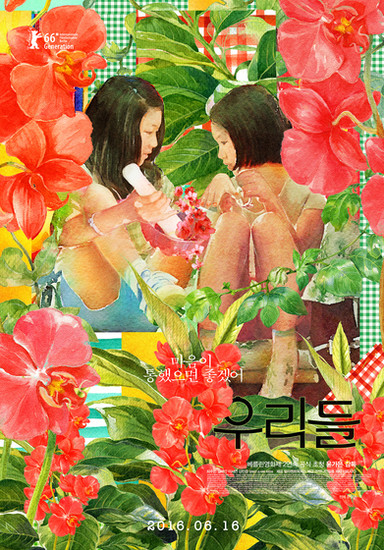


A poster created by designer Park Si-young. She has produced key art for domestic and international entertainment content across various fields and styles, ranging from commercial and independent films to exhibitions, performances, advertisements, and festivals. (Courtesy of Studio Bitnaneun)
Q. You left Seoul and moved to Goheung in 2021. I am curious about the reason for your relocation.
It was difficult to find a house I wanted to live in in Seoul. Compared to the high prices, the materials and overall build quality felt cheap. I wasn't looking for real estate as an asset; I wanted a home to live in for a long time. There was no vacant land available, and I didn't want to tear down the current building to construct a new one. So, I turned my attention outwards. I realized, "It seems impossible to live in the house I want here."
Q. Then why was it Goheung and not another region?
I wanted to live by the sea, so I took a boat from Gijang, Busan, and surveyed the entire South Coast. Do you know how beautiful the South Coast belt is when viewed from the open sea? Especially the line stretching from Tongyeong to Jindo—I tell you, it rivals Ha Long Bay or Sicily. One day, I got off at Ikgeum Beach in Goheung and spent some time there, and it was just wonderful. I felt warmly welcomed on this sunny land. Ah, this is it. Let's just build a house here.
Q. You have already been living in Goheung for five years. Having lived here, what aspects of Goheung have you found fun and interesting?
The people are lively and generous. There is a culture of hospitality where they are willing to give. Located in a fertile granary since ancient times and by the warm sea, imagine how wonderful it must have been to eat, play, and share. The vibe emanating from the broad embrace of the South is truly charming. And the natural scenery, largely untouched by human hands, goes without saying.

Do you know how beautiful the South Coast belt looks from the sea ?
In particular, the line extending from Tongyeong to Jindo
I'm telling you , the Rhine is just as good as Ha Long Bay or Sicily .

Q. It took me over five hours to get from Seoul to Goheung. Weren't you afraid of traveling so far?
The physical distance between people is rapidly shrinking. With communication network speeds, autonomous driving, and robotics, I predicted that there would be even more groundbreaking advancements within the next 10 years. If that happens, the opportunities actually lie in the provinces. That is what I find regrettable: resources are overflowing, yet there are currently no people in the provinces who can recognize and capitalize on them.
Q. You once wrote on social media, “Since moving to Goheung, my work radius has expanded compared to when I lived in Seoul.” Entertainment design work, including movie posters, is likely concentrated in Seoul; doesn’t that make your work difficult?
It is tiring going back and forth. But after living in the back of the country, going to Seoul actually feels a bit like going on a trip (laughs). The travel time from Goheung to Seoul is about the same as going to Tokyo. Since I travel back and forth so often, I’ve started seeing markets that I never noticed before. In fact, the number of Japanese clients has increased. Lately, I’ve even been getting contacted from the U.S. and Paraguay. You have to tell you just how big the market is outside of Seoul.
Q. Since you are working remotely, your work routine must be important. You also need to keep it well separated from your daily life of farming, walking the dog, and going to the seaside. How do you usually manage this?
I’ve tried all sorts of methods over the past 20 years. The conclusion I reached after coming here is to "rely on flexibility." Depending on the partner, the nature of the work, and the budget. After all, a routine isn't the routine of the work itself, but the routine of me as a person. Since it is an arbitrary standard, it is impossible to stick to it in the face of countless variables. In fact, by handling things as they come—like the wind blowing—my productivity has skyrocketed. Because I don't have any self-imposed constraints, I’ve also been able to experiment a lot with design. People have told me, "I thought Park Si-young was past his prime, but your style has improved again lately" (laughs).

Things that don't exist in Seoul, things Seoul can't replicate
Q. I am also curious about local content viewed from a designer's perspective. There is quite a bit of negative sentiment regarding domestic tourism products and various regional events.
Civil servants, who are already overworked, end up becoming the same because you are squeezing them into coming up with ideas and planning as well. There are cultural planners active in the local area, you know. If you look outward, there are likely even more. We just need to open a market where the products they have fiercely planned and commercialized can be bought and sold transparently. Let them set their own prices, and the local government acts as the client, comparing various options to purchase those plans.
Q. It seems like a stage worth jumping into for planners and designers who thought, "I could do a better job."
Think about how many architecture and advertising/PR graduates are going crazy right now because they have no work! We should let these friends, who are full of ideas and enthusiasm, do what they are good at.


Q. It seems that provincial areas feel more limited compared to the capital region due to the lack of contemporary cultural infrastructure.
If you cannot satisfy diverse needs as effectively as Seoul, you simply need to develop entirely different needs that cannot be fulfilled there. You must present a model for an 'alternative life' that goes beyond just regional living. This could involve showcasing an attractive lifestyle that people would want to emulate, or establishing mechanisms for economic gain. Currently, young people see no clear path forward, so they have no compelling reason to settle in the provinces.
Q. Actually, the region must already possess many unique resources that aren't being properly utilized.
You said earlier that it was your first time visiting Goheung and you loved it. You mentioned the clear seawater, the abundance of islands, a strange Jeju vibe, and exotic scenery that felt like you were seeing it for the first time. That is what travel is all about—to encounter that unfamiliarity. So, what should you do in the provinces? Just fully immerse yourself in the unfamiliar. Show them things they don't have in Seoul, things they can't replicate.
Q. What aspects would you recommend considering further as a local-based creator and producer?
First, you must acknowledge your complex and defeatism regarding Seoul. Do not deny that you are constantly conscious of Seoul while creating, or that you use your regional environment as a self-justification or excuse. We live in an era where a painting by a girl from Samoa sells for billions at the Hong Kong art market. You can erase the very phrase "regional artist" from your mind. Just an artist. What is truly important is thinking about "how to show more." There is no longer a public willing to go to the trouble of discovery. The algorithm spoon-feeds everything, so why bother? You need to focus on how to get better exposure for your projects, your results, and your art. Try everything you can.
You can erase the very phrase "local artist" from your mind.
Just an artist.
The really important thing is thinking about 'how to show more.'"

Moving together with colleagues
Starting from resources instead of scarcity
Q. One of the things you have emphasized to young people in various interviews is, "Don't isolate yourself." I think this is an even more important issue in small cities with poor cultural infrastructure.
That is why you need to find colleagues. It is colleagues who break the self-justification of feeling "trapped in your region." People who create and take action together with a common purpose cannot remain stagnant. Even if you have been trying the same thing for years, colleagues give you the strength to push it forward. They also give you the strength to try changing things up in a different way.
Q. How can I find a good colleague? And how can I become a good colleague myself?
Focus only on the idea and the sense of purpose. Don't weigh whether someone fits you in this or that. It's like trying to find someone with similar political leanings when you don't even have a pair of pants that fit you perfectly. If you do that, you won't be able to meet anyone. Looking for someone to realize your idea and execute this project well is, so to speak, a selfish act. And it is through that selfish act that colleagues are formed.

I need to find a colleague.
Because it is my colleagues who break the self-justification of being 'trapped in the region.'
People who create and act together with a common purpose
It cannot sit in one place.
Q. Three years ago, you held a workshop called 'Bitnam' for design majors, creators, and planners based in the Honam region. A recruitment notice for a new workshop was also posted last month. Is this also a project started to help juniors find colleagues?
I initially started this because I wanted to give them an opportunity to learn about work systems and practical skills—like a kind of observation class where we showed them how we work. But because they were so enthusiastic, we started giving lectures little by little, and the scope of the initiative grew. What these students need most right now is the chance to try something unfamiliar and new. The experience of meeting colleagues with the same goal, chatting with them, and working together to boost their morale. That alone is enough for them to succeed on their own.
Q. What will be the focus of the workshop starting in August?
If we planted the seeds of ideas last time, our goal this time is to produce real-world examples within the region. We believe we can create synergy by effectively connecting diverse applicants, such as those who want to renovate their parents' cafe or those struggling to run a zero-waste shop. We aim to create realistic scenarios where young people can generate income by utilizing local resources. We will strive to provide seminars and lectures both online and offline, as well as facilitate coaching from industry experts.


What do you do in the provinces? Just get completely unfamiliar with everything.
"Showing things that Seoul doesn't have and things Seoul can't replicate."
Q. What would be effective for local governments to provide to young people?
Instead of just creating things like youth malls, I wish they would use that money to provide KTX train tickets so they can travel back and forth to Seoul freely. Rather than simply replicating what is in Seoul, they should be allowed to see, hear, and experience things to their heart's content. After all, they can simply utilize the resources unique to their region. If that happens, Seoul's content becomes a bonus rather than a lack for these young people. We should let them enjoy double the pleasure.
Q. Conversely, there are also people who have only experienced and worked in Seoul and the metropolitan area, and within the mainstream establishment. It is not uncommon for them to feel stifled by that environment.
I You just need to start with what you have. You have that affluent environment, that rigorous aesthetic sense acquired from a well-educated background and relationships. Carefully explore what you possess and try to create something truly acute. To get started, you first have to get up. If you begin with what you can do right now, you will find yourself moving again immediately.

If you use the world broadly without limitations
Q. Advanced technological advancements, including AI, robots, and autonomous driving, will have a significant impact on the existing metropolitan-provincial structure and boundaries. What virtues and capabilities will be required of designers and producers living in regional areas in the future?
You will need to break away from the ways you have become accustomed to—in other words, from the past. You will also need to pay close attention to how to use technology. But above all… I hope you do not limit yourself. Do what is fun and what you need at the moment. If you want to go to Seoul, go; if you want to stay in the countryside, stay. Life is so long and full of so many interesting things, so why try to have just one thing? We are not divided into black and white; we are simply complex lumps of noise. Acknowledge that and use the world broadly. You have to experience things that don't suit you to come to like what does. If you move just a little and use your world a little more broadly, the gaps will become meaningless.
Q. Is there anything new you would like to try in the future?
The reason I came here as a designer is that I want to create designs that are helpful to those working locally. I have ambitions in that area as well, such as shaping the local landscape using shop signs and establishing a system to provide e-commerce training to the few remaining local small business owners. I plan to approach this as a long-term project, tackling it step by step with the mindset of farming. This workshop will serve as the seed for that.
Q. Are you satisfied with your life in Goheung right now?
Absolutely. It’s like my mode of life has shifted, just like switching from Windows to Mac. Now, no matter what people say, the daily life I lead right now is what matters to me. I’ve achieved professional success, I’ve even saved my own life, and I’ve lived quite an interesting one. So now, more than any specific goal, each day is the most important thing. I think I’ve found my own answer to how to create without disrupting my daily routine.
fin.
𝗜𝗻𝘁𝗲𝗿𝘃𝗶𝗲𝘄𝗲𝗲 Siyoung Park
𝗜𝗻𝘁𝗲𝗿𝘃𝗶𝗲𝘄𝗲𝗿 Jeonghyeon Kim
𝗣𝗵𝗼𝘁𝗼𝗴𝗿𝗮𝗽𝗵 Chanwoong Jeong
Edeit Seulgi Lee
𝗗𝗲𝘀𝗶𝗴𝗻 Dayeon Lee
Editor. Kim Jeong-hyeon
A freelance editor covering urban lifestyle. I introduce notable people and content in the fields of F&B, culture and arts, and fashion, focusing on local shops and brands. I have published the essay collection *What Does It Mean to Be Myself?* on tastes and preferences, and I also work as a moderator for talk programs.
Double the fun
Park Si-young
Local
𝗜𝗻𝘁𝗲𝗿𝘃𝗶𝗲𝘄𝗲𝗲 Siyoung Park
𝗜𝗻𝘁𝗲𝗿𝘃𝗶𝗲𝘄𝗲𝗿 Jeonghyeon Kim
𝗣𝗵𝗼𝘁𝗼𝗴𝗿𝗮𝗽𝗵 Chanwoong Jeong


