Cheongju
The Present and Future of Jikji
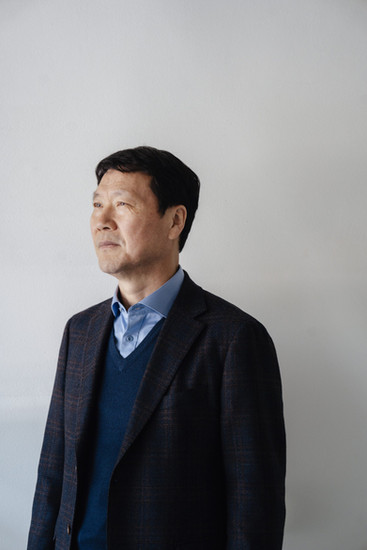
Jeon Yong-un, Cheongju Ancient Printing Museum
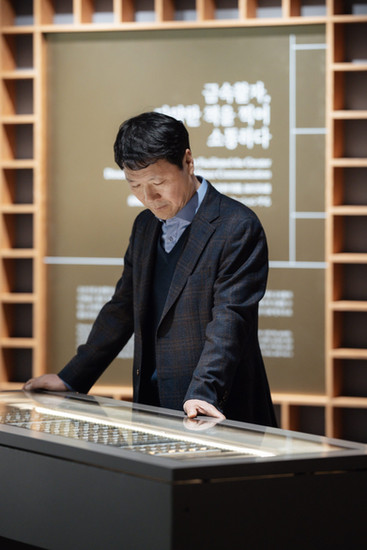
As the director of the Cheongju Ancient Printing Museum, he constantly questions the present and future of the Jikji—about Cheongju, the Jikji, and the possibilities of movable type printing.
Edit Danbee Bae
Write Jisun Chae
Photograph Yeseul Jun

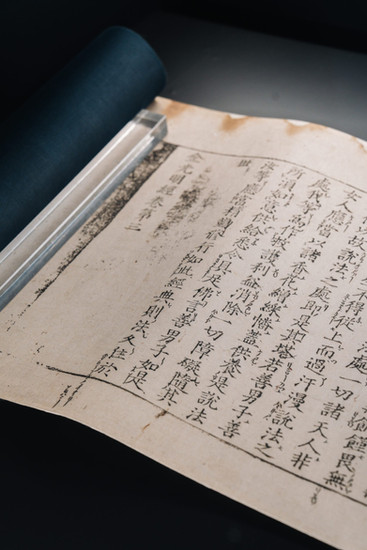
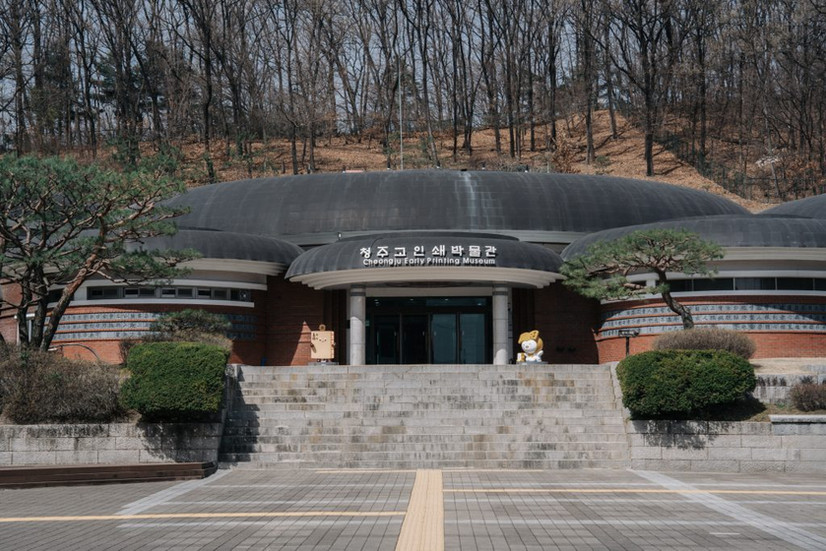
The Cheongju Ancient Printing Museum is a place with a long history, associated with the world's oldest metal movable type book, the Jikji Simche Yojeol.
The Cheongju Ancient Printing Museum is a museum built on the site of Heungdeoksa Temple, where the *Jikji* was published. It is a place deeply connected to the *Jikji*, the oldest surviving metal movable type printed book in the world. The *Jikji* was printed at Heungdeoksa Temple in Cheongju in 1377. Until 1985, while it was widely known that the *Jikji* was the world's oldest metal movable type printed book, the exact location was unknown. It was only in 1985, during the residential development of Ungcheon-dong, that artifacts related to Heungdeoksa Temple were discovered, leading to the realization that Heungdeoksa was the place where the *Jikji* was published. The site was designated as a historic site in 1986, and after a preparatory process, the Cheongju Ancient Printing Museum officially opened in March 1992.
I noticed that the Cheongju Ancient Printing Museum is written as 'CHEONGJU EARLY PRINTING MUSEUM' in English. I was also curious why 'Early' is used instead of 'Old' when referring to 'ancient'.
If I used 'Old,' everyone would immediately understand the meaning because it is a familiar word, but 'Early' might seem difficult and unfamiliar. I wanted to convey that the museum is specialized in focusing on the early Goryeo Dynasty, the period when the Jikji—the central pillar of the museum—was printed, rather than simply implying that it is old. That is why I used the word 'Early.' The late bibliographer Professor Cheon Hye-bong suggested this at the time of the museum's opening.

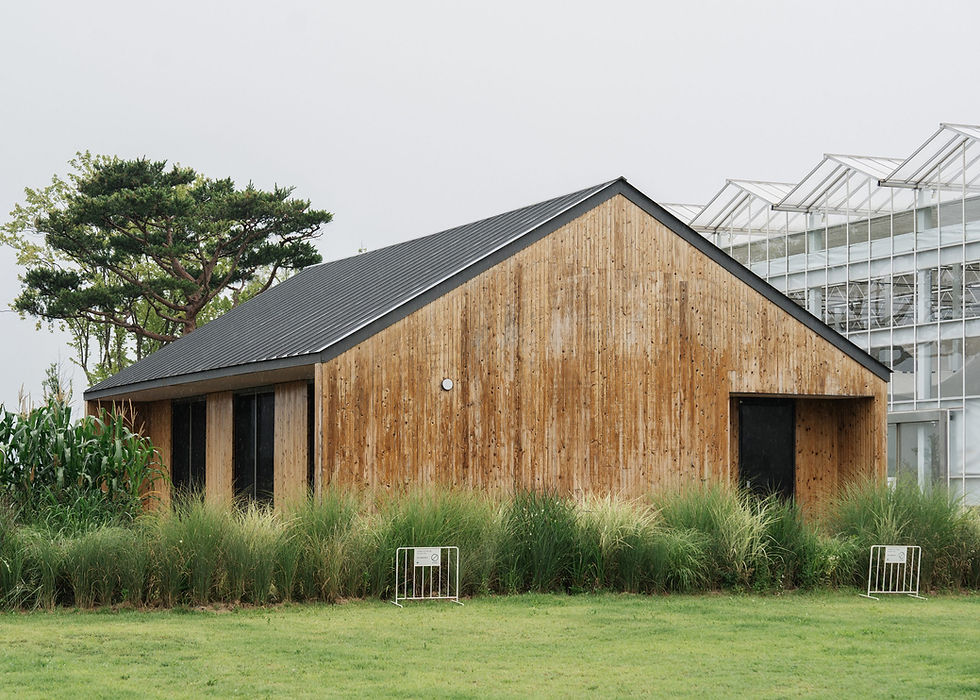
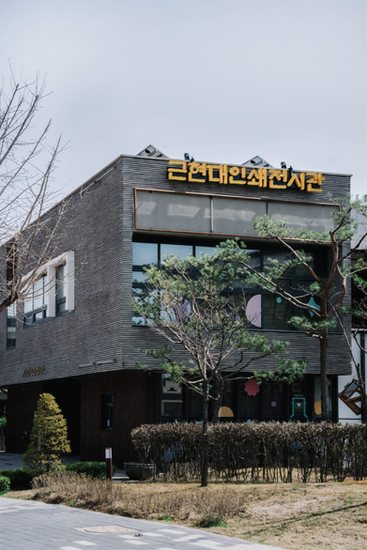
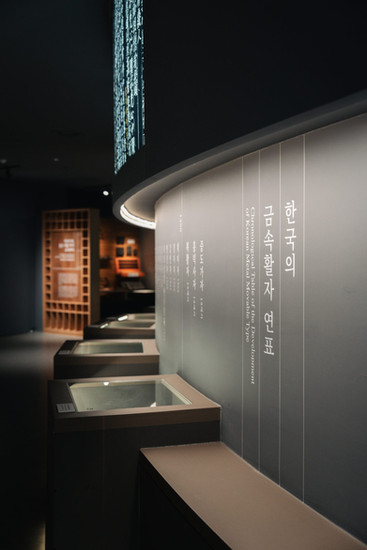
The museum is largely divided into three buildings: the Old Printing Museum Main Building, the Modern and Contemporary Printing Exhibition Hall, and the Metal Type Printing Training Hall.
Although the exhibition hall consists of three main buildings, the Heungdeoksa Temple Site is located right next to the museum. The buildings are arranged around this central location. The main building of the Ancient Printing Museum collects and exhibits early printed materials and various ancient documents, centering on the *Jikji*. Additionally, a digital immersive video hall and a digital heritage experience hall have been prepared to enhance the visitor experience. In particular, the heritage experience hall features a video titled "The Birth and Journey of the Jikji," allowing visitors to watch the story of the *Jikji*, from its discovery to how it came to be exhibited at the National Library of Paris. I believe this is particularly meaningful content for visitors as it allows them to view the important history of the *Jikji* in chronological order.
In that case, what themes do the Modern and Contemporary Printing Exhibition Hall and the Metal Type Printing Training Center host exhibitions on?
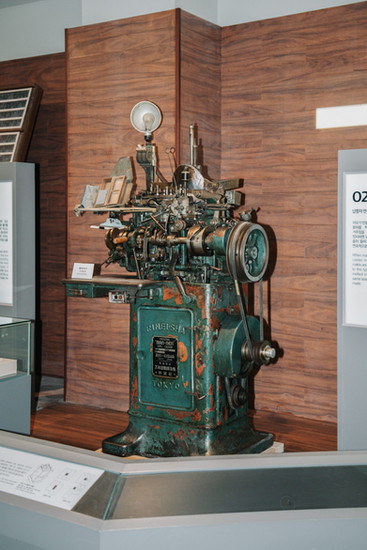
The Modern and Contemporary Printing Exhibition Hall is a venue where you can get a comprehensive overview of Korea's modern and contemporary printing technology. It displays a diverse range of printed materials published from the introduction of Western printing technology in 1883 to the present day, allowing visitors to naturally understand the evolution of printing from the modern era to cutting-edge contemporary techniques. Meanwhile, the adjacent Metal Type Training Center is a unique building topped with a tiled roof; it is home to a resident "Metal Type Master," a holder of Korea's National Intangible Cultural Heritage status for metal type. Here, they create related type and conduct research. Visitors can also witness a demonstration of how metal type is cast firsthand. You likely won't find a program like this anywhere else in the world.

I am curious how the Cheongju Ancient Printing Museum introduces the Jikji Simche Yojeol to visitors. After all, the Jikji is both the value of the museum and a great regional heritage of Cheongju.
Jikji is a printed work produced using movable metal type in 1377 during the reign of King U of Goryeo. According to records in *Dongguk Isangukjip* by Yi Gyu-bo, a court official during the reign of King Gojong, the actual first printed work of the Goryeo Dynasty was *Sangjeong Gogeum Yemun*, published in the 1230s. However, only records remain of most early movable metal type prints; Jikji is the only surviving physical artifact. Recognized for its cultural value as the oldest surviving movable metal type print in the world, Jikji was inscribed on the UNESCO Memory of the World Register in 2002. However, Jikji holds great significance not only for its historical importance but also in terms of the dissemination of information.

Before metal type printing, it was woodblock printing, right?
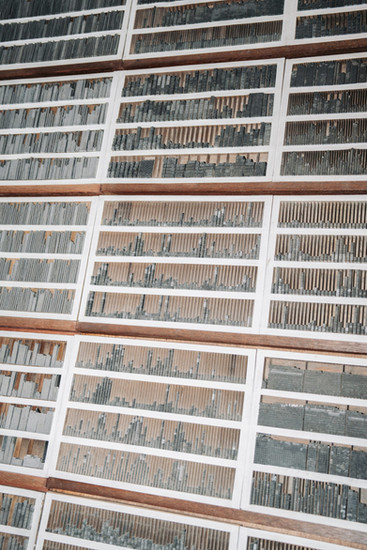
Woodblock printing is a method of printing by carving characters into wood, applying ink, and placing paper on top; however, woodblock printing cannot change the content and must print only with that specific content. To print something different, the plate must be carved again. To overcome these limitations of woodblock printing, metal movable type was created during the late Goryeo Dynasty, and metal movable type printing was attempted. With metal movable type, even after typesetting and printing, characters from the existing plate can be removed and inserted to print again. This allows printing plates to be stored for a long time and enables the easy printing of a wide variety of books. In a word, for that time, it was an "information revolution." That is why it can be referred to as the "invention of metal movable type printing."
What specific content does the Jikji contain?
The original, accurate title of the book is *Baegun Hwasang Chorok Buljo Jikji Simche Yojeol*. It is commonly shortened to *Jikji Simche Yojeol* or simply *Jikji*. It consists of content compiled in 1372 by Monk Baegun Hwasang, a native of Gyeongju, Jeonbuk, and printed using movable metal type in 1377. The main theme of *Jikji* is *Jikji Simche Geoyeol*. To put it a bit more formally, it is derived from the famous phrase of enlightenment, *Jikji Insim Gyeonseong Seongbul*. Meaning, "When a person holds a righteous mind, they realize that their nature is the Buddha's mind," it signifies a famous saying regarding the realization of the Buddhist path in Seon Buddhism.







Director, is your hometown Cheongju? How long have you worked at the Cheongju Ancient Printing Museum?
My hometown is Cheongju. I entered and attended a university in Seoul, but returned to Cheongju due to family circumstances. After holding various positions starting in 1992, I volunteered to come to the museum last January. About 20 years ago, the Jikji Promotion Team existed here instead of the museum. In 2005, while working as the team leader for the Jikji Project at the Promotion Team, I organized the Jikji Festival and presided over the UNESCO Jikji Prize ceremony. Also, this region is the Jikji Cultural Special Zone. In 2007, I drafted plans as a working-level official for the Jikji Cultural Special Zone. That is how my connection with the Jikji began. In my later years, I felt a desire to do meaningful work, and after much deliberation, I returned to the museum. I believed that a new definition of the value of the Jikji was necessary. I felt that we must understand the Jikji by distinguishing between its fundamental and derivative values. To do so, I believed that in-depth research into the Goryeo Dynasty was required, along with systematic research on how the Jikji should be embodied as a value in the present and future.
Is the museum pursuing the globalization of Jikji as part of that?
Cheongju is the birthplace of the *Jikji* and the center of the history of metal movable type printing culture. I believe the Cheongju Ancient Printing Museum can play a role in introducing the invention and creative spirit of Korea's metal movable type printing technology to the world. With this in mind, we are pursuing projects to globalize the *Jikji*. Before the discovery of the *Jikji*, Gutenberg's *42-line Bible* was listed in world textbooks as the oldest metal movable type printed book. However, after the discovery of the *Jikji*, we worked diligently to gain recognition from UNESCO, and textbooks in various countries have since changed their narratives to state that the first metal movable type printing technology originated in Korea. I consider this a particularly significant achievement among the accomplishments of the museum. While printing technology itself is important, it is crucial, above all, to research the impact it has had on human history. I believe the museum's role is to contemplate how to inherit, spread, and develop this technology in the future, and to convey this to a wide audience.

I am curious to know what plans the museum and the director have regarding this.
Basically, we are conducting various academic conferences and maintaining continuous cooperative relationships with museums and libraries in different countries, such as the Gutenberg Museum and the National Library of France, to promote research and collaborative activities. In fact, we maintain close ties whenever we hold an event. Last year, the Director of the Gutenberg Museum and the Director of the Literature Department at the National Library of France attended the Jikji Cultural Festival. Going forward, we plan to continue conducting research activities with leading museums and libraries around the world in this manner and actively strive for the globalization of the Jikji.

Maker's Pick
Program 3 at the Cheongju Ancient Printing Museum

Jikji Culture Festival
Visitors can experience the world's first metal movable type printing technology and personally appreciate the excellence of our printing culture. This festival, held every other autumn, features Jikji printing and metal movable type casting experiences, exhibitions, and performances, allowing visitors to experience the charm of both tradition and modernity.

Demonstration of metal type casting
National Intangible Cultural Heritage Master of Metal Type, Im In-ho, demonstrates the traditional metal type casting process at the Metal Type Training Center.
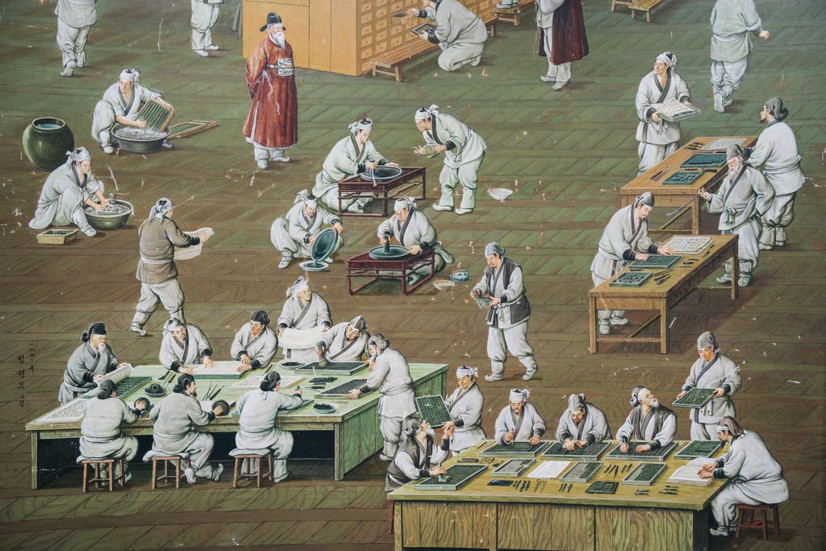
Participants can observe traditional production processes firsthand, such as letter carving, wax carving, and casting.

UNESCO Jikji Prize Awards Ceremony
The UNESCO Jikji Memory of the World Prize was established in 2004 to honor the value of the Jikji Simche Yojeol, the world's oldest metal movable type book. It is awarded to individuals or institutions that have contributed to the preservation of documentary heritage and improved accessibility.







The Present and Future of Jikji
Jeon Yong-un
Cheongju
Edit Danbee Bae
Write Jisun Chae
Photograph Yeseul Jun