Cheongju
Well-roasted coffee, old restaurant, cast iron pot
Cheongju Travel and Goods | Park Chan-yong
I buy all sorts of things, filling my hands to the brim. Following the cauldron, the load gets even heavier.
Edit Areum Lee
Write Chanyong Park
Photograph Chanyong Park
Illustration So won(Neap)
Exit 5 of Osong Station. I take one of the taxis in the long line and head towards downtown Cheongju. The driver is polite and speaks little. When I strike up a conversation, he begins talking as if answering is part of his job. I like drivers like this. According to the driver, Osong, Cheongju, and Sejong form a triangle. People from the three regions travel back and forth, and Cheongju is vibrant because there are many schools and jobs. As if to prove his point, a high-rise construction crane is visible outside the window. It takes about 20 minutes by taxi from Osong Station to downtown Cheongju. In the meantime, an excellent local briefing concludes, and I arrive at my destination.
Layer Coffee. It is located near Dongbu Warehouse, behind the National Museum of Modern and Contemporary Art. Having heard that there are many cafes in Cheongju relative to its population, I received recommendations for a few. I visited Layer Coffee first because it closes at 6 PM, the earliest among them. Kang Seong-sik, the owner of Layer Coffee, happened to have finished reading my book, so he recognized me the moment he saw me. To think he read a book that even my parents haven't finished reading suggests he has a unique personality. Layer Coffee also has its own distinct character.
The sense of order that seems chaotic yet organized, the layering of figures, Oriental paintings, designer furniture, and calligraphy hanging together, and the attitude of being kind to confused customers while being strict about the coffee. I bought Layer Coffee Drip Bags to remember all of that. It is the first thing I bought in Cheongju.

Leaving Layer Coffee, I head to the second cafe: Ilmyeonsik . It fits the type of Korean-style cafe I perceive. Its name, a Sino-Korean word with a sentimental feel, stands out. There is a turntable at the entrance, yet the music plays via Bluetooth. CEO Kang Seong-sik noted that a characteristic of cafes in Cheongju is that "trends change surprisingly quickly," and I think I understand what he meant. However, regardless of Ilmyeonsik's exterior, the atmosphere here is warm and relaxed. The seating is spaced far apart. People sit spaced apart, each doing their own thing: studying, chatting, reading. It makes me wonder if this is what the generosity of Chungcheong is all about. On the bookshelf, visitor guestbook notebooks are stacked to a height of about 40cm.


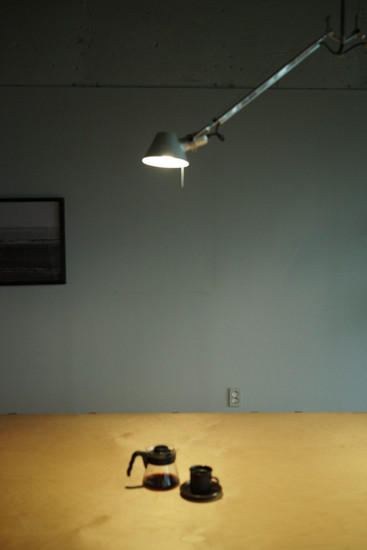
The next cafe is Munchbite in front of Cheongju Girls' High School. As expected, it is a pleasant neighborhood cafe. Since it is a cafe in front of the school, there are no people on Saturdays. On the quiet street in front of the school, where few people are around, the owner, wearing a checkered shirt and sporting a 5:5 parted hairstyle, is baking pastries to sell on Monday. In front of the S'mores cookies, there is a description that reads, "Cookies made with marshmallows donated by ** Teacher." When I asked who ** Teacher was, I was told they were a teacher at Cheongju Girls' High School. It seems that the memories of Cheongju Girls' High School students will be baked right here.

Perhaps because I drank three cups of coffee in a row, it feels like the coffee fairies are scrubbing my stomach. I need to eat. I have a place in mind: Sammi Restaurant. It is a "Centennial Store," an establishment selected by the Korea Small Business Corporation for small business owners with over 30 years of history. I checked the menu and found there are only two items: Jokbal (pig's trotters) and Sujebi (hand-pulled dough soup). I like that. The taste is even more remarkable. It is a dish made with simple ingredients, rigorously prepared and cooked simply. Fresh pig's trotters are boiled in a soy sauce broth with only garlic and ginger , then cooled. It tastes like the ideal Jokbal, without pandering to trends or resorting to cheap tricks. Even the Sujebi, likely designed to add carbohydrates, is excellent. The signboard indicates that it has received certifications as a "Chungcheongbuk-do Family Heritage Establishment" and a "Cheongju City Designated Local Cuisine Establishment." It is essentially a triple crown of certifications from the Corporation, Chungcheongbuk-do, and Cheongju City. To borrow a phrase from the Michelin Guide, the taste is worth the trip just for this Jokbal.
Sammi Restaurant left such a strong impression that I am going to another restaurant that wasn't originally on my itinerary: Cheongsong Tongdak. Like Sammi Restaurant, it received the "Centennial Restaurant" certification for its single menu item. Since it wasn't far from my accommodation near Central Park, I got it to go. Taking a bite at my table back at the accommodation, it was indeed shocking. There are no gimmicks or tricks; it is made with good ingredients and adheres to principles. The taste is simple and sincere, without any petty gimmicks. The radish pickles, sliced about twice as long as the usual chicken radish pickles, are also excellent.
I can't fall asleep easily after drinking three cups of coffee. I spent a long time looking for a restaurant to visit the next day and dealing with my manuscript deadline, and it looks like dawn is about to break. Thinking I should just get a little sleep, I close my eyes. My first destination the next day is Namjudong Haejangguk nearby. Passing through a shopping street so empty it felt like a hollowed-out city, the area in front of this spot is packed with cars. Although there are three items on the menu, it is essentially a single dish. After all, blood sausage hangover soup, beef hangover soup, and short rib soup are all systematically the same dish. The taste is also impressive. The broth is red, but not painfully spicy. The bowl is so heavy that it is difficult to lift easily, as if trying to retain the heat. Although the portion doesn't look small on the outside, the meat has settled deep to the bottom of the bowl. It seems fair to say that the dignity and generosity of Chungcheong Province are contained in this single bowl.

A photograph hangs on the wall of Namju-dong Haejangguk. It shows Namju-dong in the 1950s. They say it was a cattle market. Befitting its location near a cattle market, an agricultural equipment shop still stands near Namju-dong Haejangguk. I peeked around wondering if there was anything interesting to see, and before I knew it, I had bought a cast-iron cauldron. It is made by Daeheung Foundry in Gwangju, which still melts molten iron to produce cast iron. Being made of cast iron, it feels as heavy as a light dumbbell. I thought I would just buy specialty coffee beans in Cheongju, but in an instant, I find myself walking away with a dumbbell-sized cauldron stuffed into a plastic bag.

Passing Yukgeori General Market, I arrive at Dyer Coffee . Dyer Coffee is such a conceptual coffee shop that carrying a traditional cauldron feels almost humbling. There are no windows at all at the entrance, so it is pitch black once you step inside. You can check the shop's introduction and menu via a video that appears when you scan the QR code at the entrance. I order two espressos made with their regular beans and one seasonal blend drip coffee. As I sit in the seating area, which resembles an open-air theater auditorium, a barista brews the coffee as if standing in a DJ booth. Ambient music, the kind you might find if you searched "cafe music" on YouTube, plays continuously. While I ponder the state of coffee in modern society, the taxi to my next destination arrives.


The taxi leaves the old downtown area of Cheongju and heads toward a nearby industrial complex. It is the Hankook Ceramic Cheongju Outlet. Located next to the Hankook Ceramic headquarters in Cheongju, it is literally a factory-style outlet. Hankook Ceramic is Korea's premier manufacturer of bone china. Bone china is generally made from cow bone meal, and its distinctive milky white color is its charm. At the Hankook Ceramic Outlet, substandard bone china plates—which failed quality inspections but which I cannot distinguish the difference from—start at 1,500 won. There are also various imported ceramics brought in by Hankook Ceramic. I fill my hands with all sorts of things, including substandard bone china, Italian Cervo glass cups, and Portuguese Molde plates. My load is getting heavier, following the cauldron.

It starts raining as I head to my next destination. I am at Comfort Coffee, located in the area of the Old Printing Museum, which has recently become a cafe district. This is also a trendy café familiar to city dwellers these days. Items such as JBL speakers, Artemide and Flos lighting, and Artek stools are on display. Sitting there, various young people discuss their current topics of conversation. Ulthera, Korean soccer, the challenges of office life. Isn't this truly the story of the youth? Along with these conversations, an ordinary weekend in Cheongju flows by.

The story is drawing to a close. The reason I am ending it at this point is purely due to the length. I also have much to say about my actual next destination, which is beyond the scope of this narrative. At Gyeongjujip , a restaurant that serves only mushroom stew, I even felt a sense of reverence. I took a stroll around Seongangil and bought a book at a used bookstore. I sat at Junis Coffee by Musimcheon—a place with a name as profound as its name—and enjoyed the final coffee of this journey. After enjoying the spacious seating typical of Cheongju cafes, I returned to Seoul via Osong Station. An hour is sufficient from Osong Station to Seoul.

I want to visit Cheongju again soon. There are still many places I haven't been to. Cheongju's museums and art galleries, the large cafes outside the city that I couldn't visit due to my travel route, the restaurant I truly enjoyed this time, and other "specialties for Cheongju's local cuisine." It is a city and food that aren't overly assertive but have a clear direction, along with subtle nuances and humor that make you wonder, "Is this Chungcheong?" For example, I really want to visit Yeongesomun , one of Cheongju's Centennial Shops, as soon as possible. Yeongesomun is not a typo for Yeon Gaesomun. It is said to be "a house famous for its briquette-grilled meat and stone crab marinated in soy sauce." I really love this kind of humor.


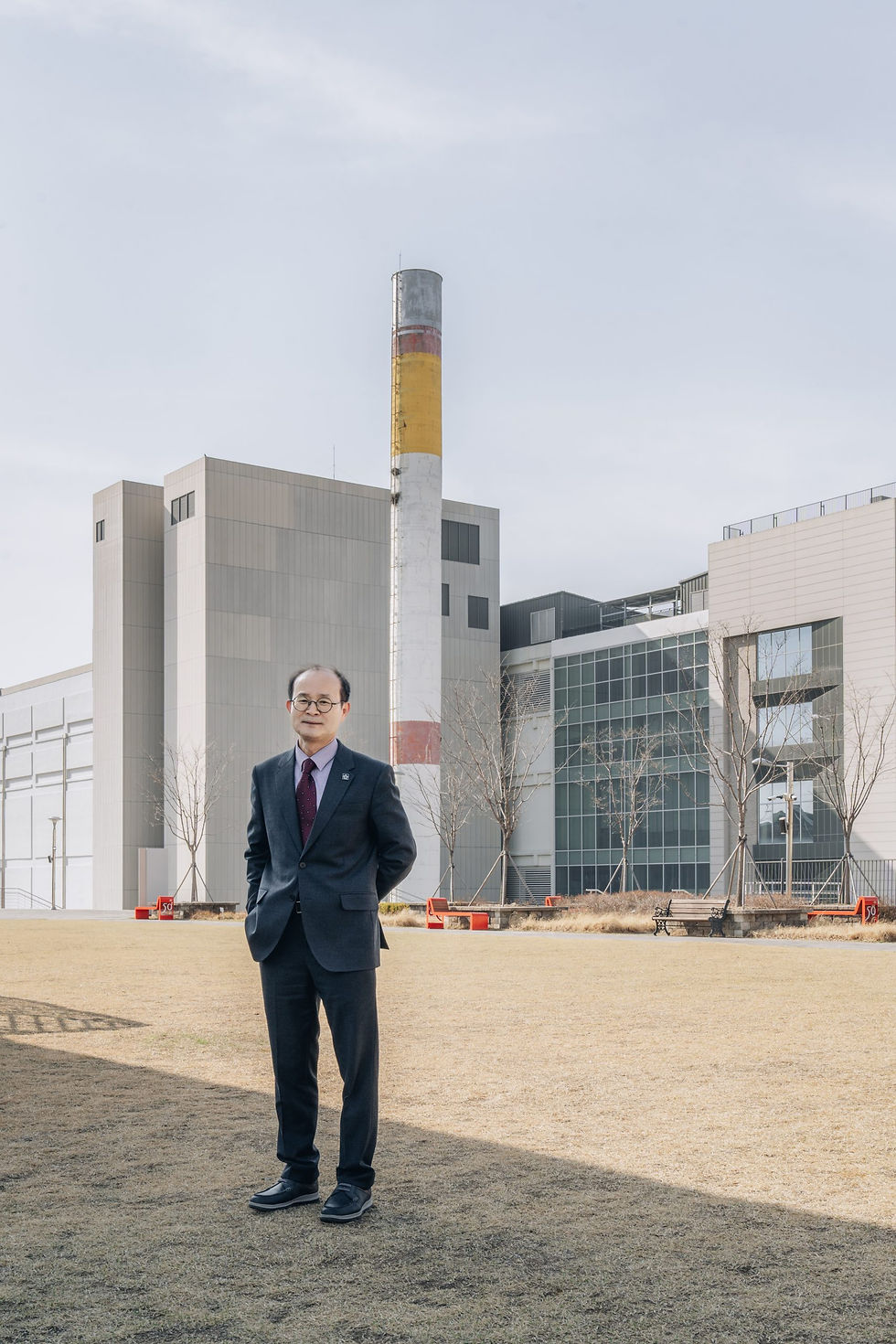
Park Chan-yong
Freelance editor and author. Worked at *Esquire*, *Chronos*, *Arena Homme Plus*, and others. Creates lifestyle information by researching and observing elements of consumer life. Authored *Yozum Brand* and *Modern Kitchen*. Currently writing his seventh book on home renovation.
Well-roasted coffee, old restaurant, cast iron pot
Cheongju Travel and Items
Cheongju
Edit Areum Lee
Write Chanyong Park
Photograph Chanyong Park
Illustration So won(Neap)