Cheongju
A huge house of works
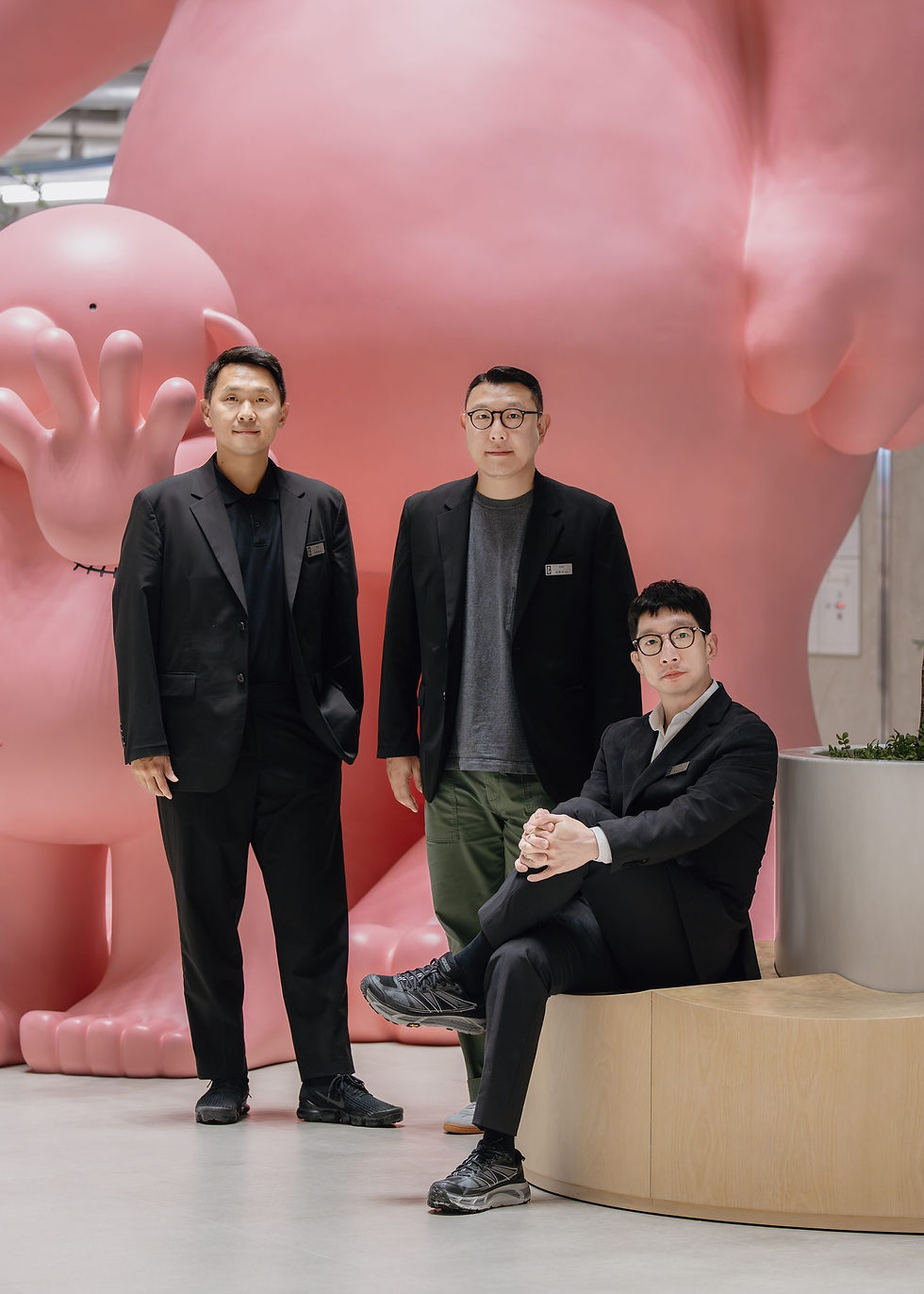
Jeong Jae-im, National Museum of Modern and Contemporary Art, Cheongju
Located at the former Cheongju Tobacco Plant, the National Museum of Modern and Contemporary Art, Cheongju, is Korea's first storage-type art museum. Equipped with open storage, visible storage, and special storage facilities, the museum is designed to allow visitors to experience the entire process of art—from creation to preservation, research, and exhibition—in a single space. Visitors encounter the artworks through glass or by opening vault doors, experiencing the museum's invisible functions and the passage of time. Embracing the history and symbolism of Cheongju, this place is a massive house of art that preserves and reinterprets national artistic assets.
Edit Danbee Bae
Write Jisun Chae
Photograph Yeseul Jun

You are working as a curator at the National Museum of Modern and Contemporary Art, Cheongju, aren't you?
Yes, I work at the National Museum of Modern and Contemporary Art, Cheongju, curating exhibitions centered on contemporary Korean art. After working at the Seoul Museum of Art for about seven years, I began working at the National Museum of Modern and Contemporary Art, Cheongju, last April, where I am in charge of curated exhibitions held in the open storage on the first floor and the special exhibition hall on the fifth floor. Recently, I curated the collection exhibition *Watercolor: Painting Water*, which runs until September 7. It is a curated exhibition that presents watercolor works selected exclusively from the museum's collection as a standalone genre. I curated this exhibition with the purpose of breaking the genre prejudice that watercolor has remained merely a stage for drawing or oil painting studies, and to explore how to view watercolor as an independent genre.
The National Museum of Modern and Contemporary Art, Cheongju, particularly stands out as an art storage center. I am curious about the background behind how it came to play this role.
The National Museum of Modern and Contemporary Art, Cheongju, is an art storage center dedicated to the preservation and safekeeping of artworks. It was established in December 2018 to efficiently manage the collection, which serves as a national artistic asset, and to expand opportunities for the public to enjoy culture and the arts. The museum's collection is growing every year, and the characteristics of the collected works are becoming increasingly diverse. In line with this trend, the National Museum of Modern and Contemporary Art recognized the need to secure stable storage spaces, plan storage areas tailored to specific characteristics, and simultaneously strengthen specialized facilities for the scientific conservation of contemporary art.

I understand that the art museum is located in a space that was used as a tobacco factory in Cheongju for a long time. What led to the opening of the museum in this location?
Cheongju has long been a representative tobacco production center, and the Tobacco Manufacturing Plant, which opened in 1946, served as a major industrial facility for the city until 2004. While the art museum was actively seeking a site for its storage facility, the city of Cheongju proposed utilizing the plant for urban regeneration. Consequently, the nation's first storage-type art museum opened in 2011 by completely remodeling the interior while maintaining the plant's existing structure. This served as an opportunity to preserve Cheongju's history and symbolism, while simultaneously expanding opportunities to enjoy culture and the arts in a city that operates major cultural facilities such as the Cheongju Craft Biennale.
As it is the country's first storage-type art museum, I think there will be special spaces unique to Cheongju.
The museum is equipped with spaces for the registration, management, preservation, and exhibition of domestic and international modern and contemporary art collections. Visitors can view the collection in its original state, from its creation to its acquisition and its subsequent confinement within the museum; furthermore, a select few can view the works through a special storage facility. The museum also houses the nation's premier conservation science laboratory, capable of restoring and treating artworks if any issues arise. Visitors can observe the conservation process firsthand and experience that the preservation and maintenance of art is a continuous, long-term endeavor. In the special exhibition hall, leveraging the unique characteristics of the Art Storage Center, visitors can experience meta-format exhibitions that research and reinterpret the museum's collection.

For example, what kind of exhibitions are there?
Exhibitions such as "How Did We Become an Open Storage?", which explained the concept of open storage; "Exhibition of Exhibitions," which re-exhibited the museum's past exhibitions; and "The Art of Naming," which questioned the birth and role of artwork titles, were new forms of exhibitions that focused on storage and collections, distinct from typical thematic exhibitions.
I don't think we can leave out the story of the Open Storage, a symbolic space of the National Museum of Modern and Contemporary Art, Cheongju.
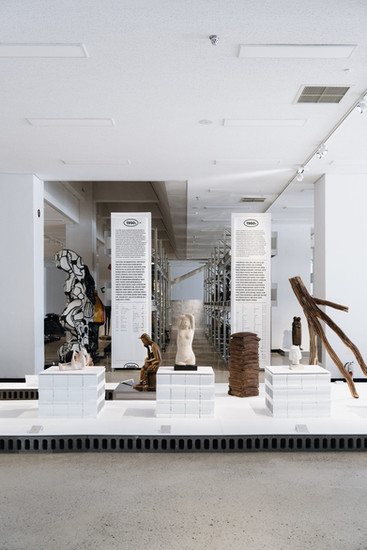
Located in the very center of the museum, the open storage on the first floor was designed to be visible at a glance through large glass windows. The artworks inside the museum are clearly visible from the outside, and many pieces are densely packed on display cases specially designed for storage. With one entire wall of the open storage made of glass, it is comprised of sculptures made of materials such as stone, wood, and bronze—which are relatively more resistant to environmental changes than flat surfaces like paintings or photographs. While contemporary art takes on diverse forms and often contains works that are perceived as difficult to understand, I believe visitors will feel a sense of familiarity as the open storage at the National Museum of Modern and Contemporary Art, Cheongju, centers on figurative works depicting nature and figures made from traditional sculptural materials.

In addition to the open storage, the art museum has various other types of storage, such as visible storage and special storage. How would you describe the appeal of each type of storage?
There are open storage areas on every floor; on the second floor, there is the Visible Storage, a closed-type storage space where you can view the hanging artworks as they are, and on the third floor, the Open Storage, which consists of works from the Art Bank. Notably, in this space, you can view the artworks by entering through the interior of a unique vault-style iron door. The Special Storage on the fourth floor is a closed-type storage area consisting of paper goods and photographs, where only a limited number of people are allowed to view it at specific times.




Perhaps thanks to the diverse forms of storage facilities, the National Museum of Modern and Contemporary Art, Cheongju, described it as “an expanded concept of a museum where one can understand even the invisible functions of the museum.” What can visitors experience through these storage facilities?
I think visitors will find the open architectural design at the National Museum of Modern and Contemporary Art, Cheongju, to be the most unique aspect. From the moment you walk toward the entrance, you can view the artworks through the windows on the right. Rather than viewing it as a museum merely as an exhibition space, you can imagine yourself being invited into a grand home for the artworks. The most distinctive charm lies in the fact that the entire museum feels like one large storage facility. Furthermore, by opening up the previously secretly closed storage spaces, visitors can directly see what artworks are there and what happens to them. I believe this will provide an opportunity to create new perspectives. It also allows for a transparent encounter with the outcomes and processes of the museum system.

With the opening of the National Museum of Modern and Contemporary Art, Cheongju, I feel that another opportunity has been created for Cheongju to establish itself as a city of culture.
The National Museum of Modern and Contemporary Art, Cheongju is the first museum established by the museum outside the capital region. This reflects how highly the museum regarded Cheongju's potential as a cultural city. While it is well known that Cheongju is a city of education, it seems that its status as a city of culture is relatively less known. In addition to the National Museum of Modern and Contemporary Art, Cheongju is home to the National Museum of Cheongju and the Cheongju Municipal Art Museum, and it is also the birthplace of Kim Bok-jin, Korea's first modern sculptor. Furthermore, the Cheongju Craft Biennale is continuously held every two years at the Culture Manufacturing Complex. I hope that the fact that Cheongju is a city of culture will become more widely known.
I am curious and looking forward to the vision of the National Museum of Modern and Contemporary Art, Cheongju.
Through continuous research on its collection, the National Museum of Modern and Contemporary Art is exploring ways to introduce its holdings in greater depth and to share and utilize them with a wider range of people. We plan to refine our programs to ensure that everyone—from children to seniors, and people with and without disabilities—can enjoy the museum, and we will introduce diverse approaches to understanding artworks using digital technology. In particular, we intend to consistently strive to ensure that Cheongju, as the nation's first open storage facility, serves as a cornerstone for other museums both at home and abroad. We aspire to become a model that preserves, discovers, and sustainably enjoys our precious historical and cultural resources.

Maker's Pick
National Museum of Modern and Contemporary Art, Cheongju Storage Collection 3

Kim Bok-jin, Maitreya Buddha, 1935 (Cast in 1999)
It is the first instance of a Buddhist statue being produced as a sculpture, and only one is housed in the museum. It is a work cast by the museum in 1999 from a model that had been kept after the Maitreya Buddha of Geumsansa Temple was destroyed.

Park Soo-keun, Girl, 1960
Pencil drawings by Park Soo-keun that can be seen in the drawing room on the 4th floor of the National Museum of Modern and Contemporary Art, Cheongju. Although the work was completed with just a few simple lines, it is characterized by its warmth and delicacy.

Lee Su-kyung, Translated Ceramics, 2007
As one of artist Lee Su-kyung's representative works, it is impressive how she transformed a broken ceramic piece, accidentally made incorrectly, into another beautiful work of art by mending it with gold.







A huge house of works
Jeong Jae-im
Cheongju
Edit Danbee Bae
Write Jisun Chae
Photograph Yeseul Jun